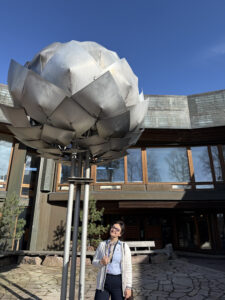
Espoo was cold, quiet, and a little remote. But for a few days, it became one of the warmest scientific spaces I have stepped into.
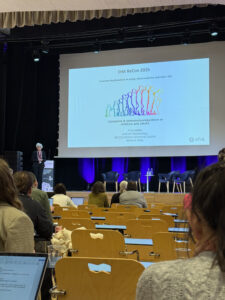
The scientific programme moved across the lifespan, from fetal haematopoiesis to clonal dynamics in later life, with a level of depth that remained challenging and energising throughout.
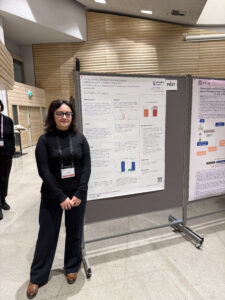
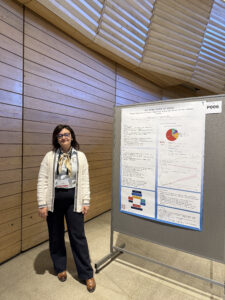
I was there with two poster presentations, and I remain deeply grateful for the support I received from Cost action Neutro-NARPS, which made it possible for me to attend and share my work. What stayed with me most was not only presenting, but the response around it. I had never before had so many people stop, ask thoughtful questions, return for a second conversation, or show such genuine interest in what I was working on. That kind of exchange stays with you. It reminds you that your work has a place in a wider scientific conversation.
What struck me most, though, before any single presentation, was who was in the room. A remarkable proportion of the attendees were young, genuinely early-career: PhD students, postdocs, clinician-scientists just starting out. And they were not just present in the passive sense. They came to the poster sessions with specific questions. They networked with warmth and without posturing. There was a generosity to the interactions I did not take for granted.
The scientific programme was excellent and uncompromising in its level. Professor Fioredda’s keynote on inherited bone marrow failure syndromes was one of the highlights for me, clinically grounded, long-view, the kind of talk that only comes from decades with the same patients. I was also particularly interested in Giovanna Mantica’s work on neutrophils and how clonal changes at the stem cell level may shape inflammatory behaviour further downstream. It was one of those presentations that quietly stays with you.
The social event was something else entirely. Instead of a city tour or a conference dinner, the organisers took us to Nuuksio National Park for half a day. We built birdhouses in small teams and carried them into the forest to install as nesting sites at the start of spring. We searched the forest floor for early signs of life with magnifying glasses, finding things that are invisible at normal speed. Cold air, quiet forest, unfamiliar faces that became easy company. The conversations that happened between those trees were some of the most genuine of the whole conference. Science is built on trust as much as on data, and trust builds in moments like those, not in lecture halls.
When I left Espoo, I did not leave feeling lost in front of high-level science. I left with something more useful. I left excited. Excited by what is possible, excited by the people I met, and excited by the realization that there is still so much room to grow. Conferences like this can sometimes make you feel small. This one did not. It made me feel challenged in the best way. It made me want to upgrade my work, sharpen my questions, and become more precise in what I build next.
I left with a full heart, a longer list of ideas, and a clearer understanding of the standards I want to rise to.
In the middle of a cold and quiet corner of Espoo, surrounded by research, forests, young minds, and generous conversations, hematology felt very alive.