Five blood-related findings that sound scarier than they sometimes are.
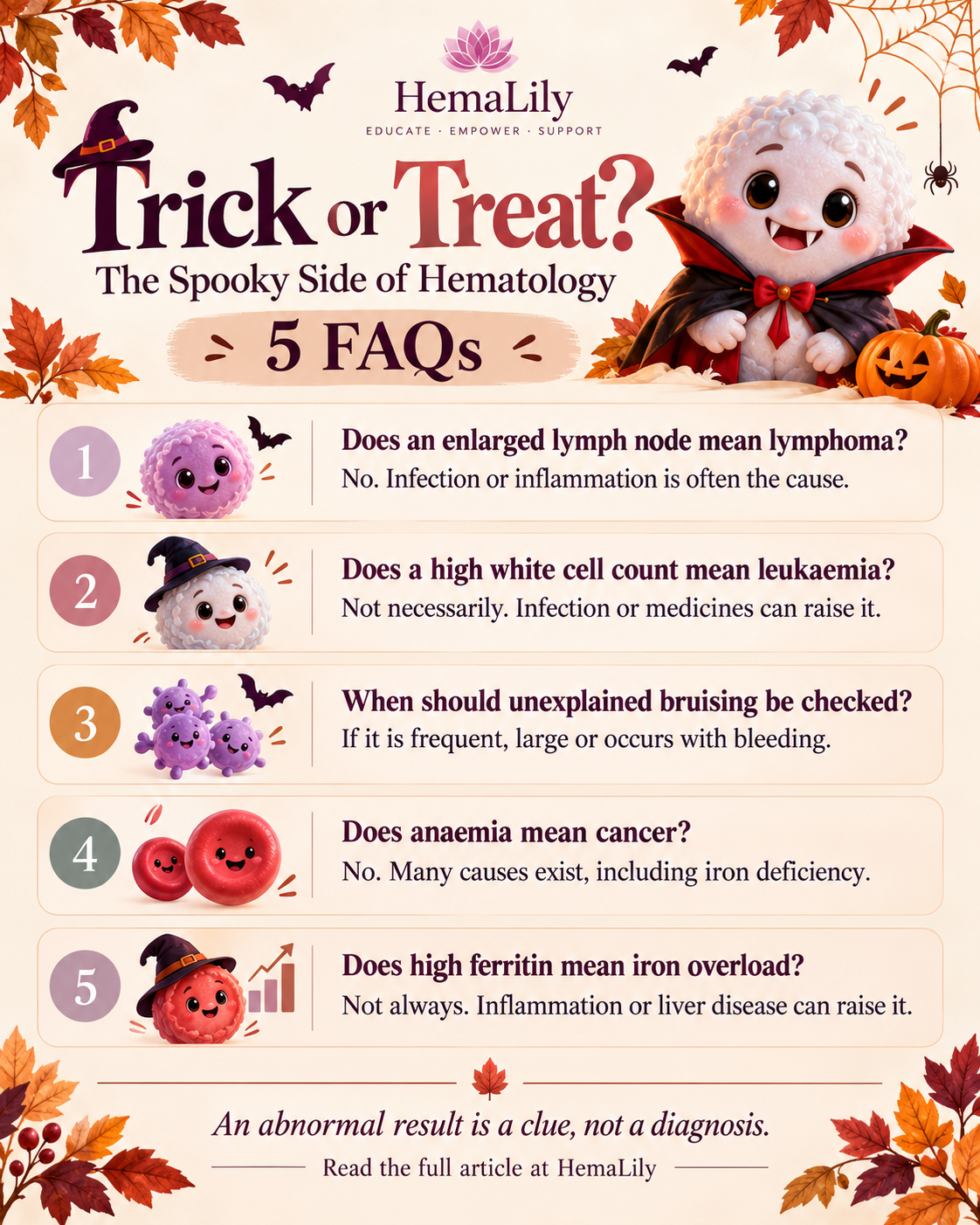
Halloween is a time for frightening stories. In medicine, however, an unexpected blood-test result or an unfamiliar symptom can cause a very different kind of fear. A lump in the neck, an unexplained bruise or a number highlighted in red on a laboratory report can make us think immediately of cancer.
But a finding is not a diagnosis. In haematology, the same result may have several explanations, from a temporary infection to a condition that needs further investigation. The trick is assuming the worst before understanding the context. The treat is knowing what matters and when to seek medical advice.
-
An enlarged lymph node: is it lymphoma?
TRICK “I can feel a lymph node, so something serious must be wrong.”
TREAT Lymph nodes are part of the immune system and often become enlarged when the body responds to an infection. A recent sore throat, dental problem or viral illness may explain a swollen node. Most cases of lymphadenopathy are not caused by cancer. [1]
What matters is how the node behaves. Its location, size, consistency, mobility and changes over time are more informative than its presence alone. Tenderness may accompany inflammation, but neither pain nor the absence of pain can confirm the cause.
WHEN TO GET CHECKED Arrange a medical assessment if the node is enlarging, hard or fixed, located above the collarbone, persists beyond about four weeks without a clear explanation, or is accompanied by unexplained fever, drenching night sweats or weight loss.
-
High white blood cells: does it mean leukaemia?
TRICK “My white blood cell count is high. Could it be leukaemia?”
TREAT A high white blood cell count, or leukocytosis, frequently occurs with infection or inflammation. Physical stress, smoking and medicines such as corticosteroids can also raise the count. Leukaemia is one possible cause, but it is far from the only one. [2]
The total number is only part of the story. Your doctor may review which white blood cell types are elevated, compare previous results and examine a peripheral blood smear. A repeat blood count is sometimes helpful when a temporary cause is suspected.
WHEN TO GET CHECKED A persistently or markedly elevated count without a clear explanation, abnormal cells on the smear, or associated anaemia, low platelets or concerning symptoms warrants further assessment.
-
Unexplained bruising: is something wrong with my blood?
TRICK “I found a bruise I cannot explain. Is this a blood disorder?”
TREAT Bruises develop when small blood vessels leak blood beneath the skin. Minor injuries are easily forgotten, and skin becomes more fragile with age. Aspirin, antiplatelet drugs, anticoagulants and corticosteroids may also make bruising more likely. [3, 4]
However, platelet disorders and problems with blood clotting can also cause bruising. A clinician may consider a complete blood count, platelet assessment and coagulation tests according to the pattern of symptoms and medication history.
WHEN TO GET CHECKED Seek assessment for recurrent or unusually large unexplained bruises, pinpoint red or purple spots (petechiae), bleeding from the gums or nose, or unusually heavy menstrual bleeding. Uncontrolled bleeding requires urgent care. Do not stop prescribed blood-thinning medicines without medical advice.
-
Low haemoglobin: could it be cancer?
TRICK “My haemoglobin is low. Does that mean I have cancer?”
TREAT Anaemia means that the blood has too little haemoglobin or too few healthy red blood cells to carry oxygen effectively. Iron deficiency is one cause, but so are vitamin B12 or folate deficiency, blood loss, inflammation and kidney disease. Some cancers can cause anaemia, but anaemia alone does not establish a cancer diagnosis. [5]
The next step is to understand why haemoglobin is low. The complete blood count, red cell indices and, when appropriate, iron studies, vitamin levels or kidney-function tests help guide the investigation. Even when iron deficiency is found, its cause may need attention, particularly if bleeding is possible.
WHEN TO GET CHECKED New or persistent anaemia should be discussed with a doctor rather than treated automatically with iron. Severe shortness of breath, chest pain or fainting requires urgent assessment.
-
High ferritin: does it always mean iron overload?
TRICK “My ferritin is high, so I must have too much iron.”
TREAT Ferritin reflects iron storage, but it is also an acute-phase protein: its level can rise during inflammation or infection. Liver disease and metabolic conditions are other common explanations. Genuine iron overload can occur, including with repeated transfusions or inherited haemochromatosis, but a high ferritin result alone cannot distinguish these possibilities. [6]
Your doctor may consider the transferrin saturation, repeat ferritin testing, liver enzymes and your medical history, including transfusions. These results are more useful together than ferritin in isolation.
WHEN TO GET CHECKED Persistently elevated or substantially abnormal ferritin warrants an explanation, especially when other iron tests are abnormal. Do not start treatment for iron overload based on a single ferritin value.
What should you do when a result looks alarming?
Rather than searching for the worst possible diagnosis, ask three questions: Is this finding new? Is it persistent or changing? Are there symptoms or other abnormal results alongside it? The answers help determine whether observation, repeat testing or a more detailed assessment is appropriate.
An abnormal blood test is a clue, not a diagnosis.
Key Takeaways
- An enlarged lymph node, high white blood cell count, bruise, anaemia or high ferritin can have several causes.
- One result should be interpreted alongside symptoms, examination findings, medical history and other tests.
- Persistent, worsening or unexplained changes deserve medical assessment; unusual bleeding or severe symptoms may require urgent care.
- Reassurance is valuable when it follows proper evaluation, not when it replaces it.
References
- Falk N, Joseph R, Dieujuste M. Lymphadenopathy: Evaluation and Differential Diagnosis. American Family Physician. 2025;112(3):286–293. Read original source
- MedlinePlus. White Blood Count (WBC). U.S. National Library of Medicine. Read original source
- National Heart, Lung, and Blood Institute. Bleeding Disorders: Symptoms. Read original source
- Cleveland Clinic. Do You Bruise Easily? 5 Reasons Why. 2026. Read original source
- National Heart, Lung, and Blood Institute. Anemia: Causes and Risk Factors. Read original source
- Government of British Columbia. High Ferritin and Iron Overload: Investigation and Management. Read original source
Medical Disclaimer
This article is intended for general information and education only. It does not constitute medical advice and is not a substitute for an individual clinical assessment, diagnosis, or consultation with a qualified healthcare professional. If you have symptoms, concerns about your health, or questions about treatment, please speak to your doctor. Seek urgent medical attention for severe, sudden, or rapidly worsening symptoms.