Understanding cancer-related fatigue, its causes, and what may help.
“Doctor, I feel exhausted all the time. Is there anything I can take so I don’t feel so tired?”
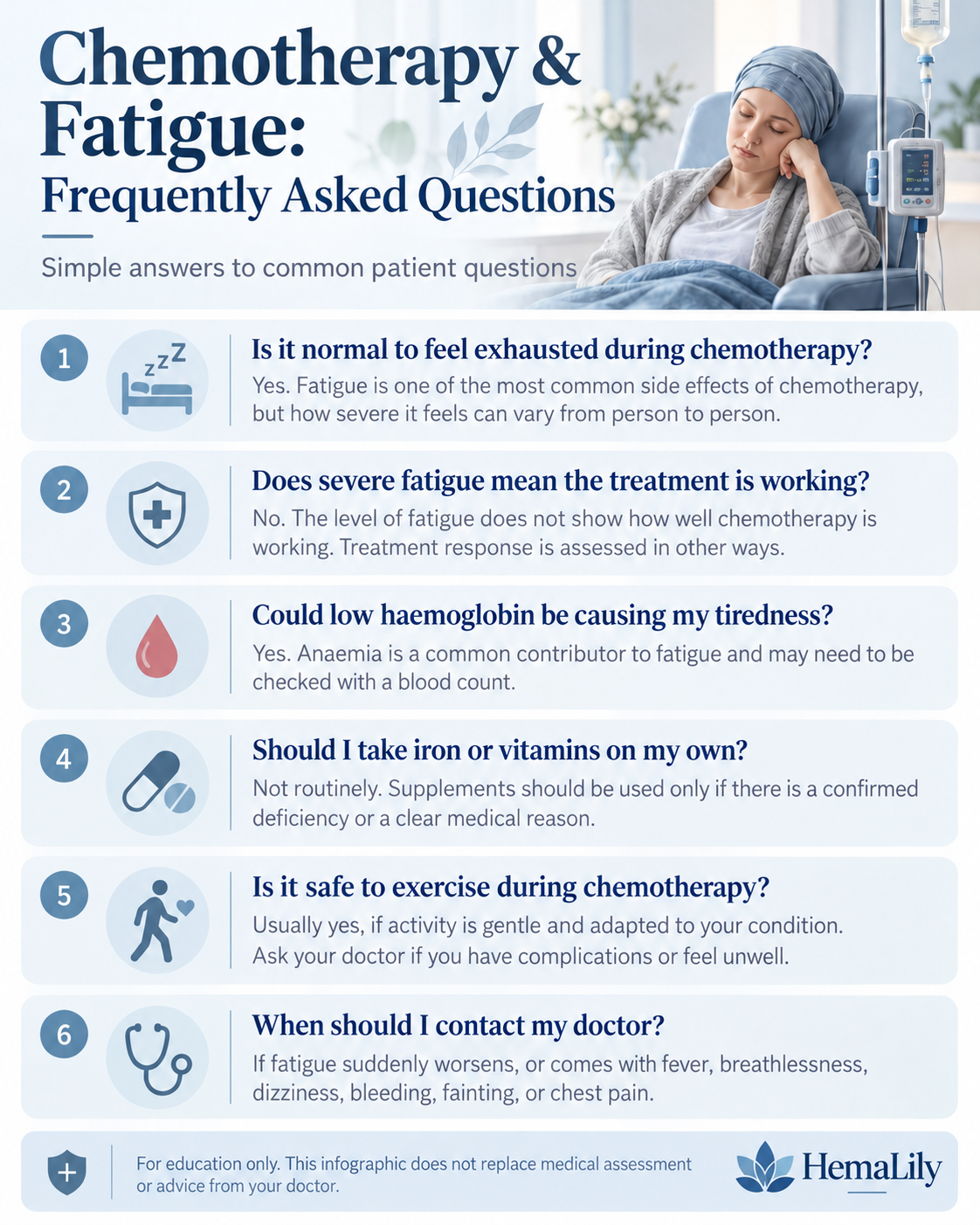
Fatigue is one of the most common complaints among patients receiving chemotherapy. Some describe difficulty completing ordinary activities, while others feel exhausted even after a full night’s sleep.
Although fatigue is an expected side effect of many cancer treatments, we should not assume that chemotherapy is always the only explanation. Several factors may contribute, and identifying them is an important part of patient care.
What is cancer-related fatigue?
We all experience tiredness after physical activity, a demanding day or insufficient sleep. Usually, resting helps us recover.
Cancer-related fatigue is different. It is a persistent feeling of physical, mental or emotional exhaustion that may be disproportionate to recent activity and is not always relieved by sleep or rest.
Patients may experience reduced energy, difficulty concentrating, physical weakness or an inability to maintain their usual daily routines.
Fatigue may appear before treatment begins, worsen during chemotherapy cycles or persist for some time after treatment ends. Its severity varies considerably between patients, even when they receive similar treatments.
Why does chemotherapy cause fatigue?
There is rarely one explanation.
Chemotherapy affects rapidly dividing cells, including healthy cells in the bone marrow. However, cancer-related fatigue is more complex than bone marrow suppression alone.
The disease itself, treatment-related inflammation, anaemia, nutritional difficulties, sleep disturbances, pain and emotional distress may all contribute.
Some patients experience nausea, vomiting or diarrhoea, leading to reduced food intake and dehydration. Others develop sleep disturbances from corticosteroids or feel drowsy because of medications prescribed for pain or nausea.
Reduced physical activity can also contribute to muscle weakness and loss of physical conditioning, making everyday activities increasingly demanding.
Often, several of these factors occur together.
Could anaemia be responsible?
As a haematologist, anaemia is one of the first conditions I consider when evaluating a patient with persistent fatigue.
Haemoglobin is responsible for transporting oxygen through the blood. When haemoglobin levels decrease, patients may experience tiredness, shortness of breath during activity, palpitations or dizziness.
During cancer treatment, anaemia can develop for several reasons.
Chemotherapy may suppress red blood cell production in the bone marrow. Certain haematological malignancies, such as leukaemia, lymphoma and multiple myeloma, may also interfere with normal blood cell production.
Other contributing factors include bleeding, iron deficiency, vitamin B12 or folate deficiency, inflammation and impaired kidney function.
A complete blood count is therefore an important part of the evaluation. Depending on the findings, additional investigations may be necessary.
However, not every patient experiencing fatigue is anaemic, and not every anaemia requires the same treatment.
Iron supplementation, for example, is not automatically beneficial when haemoglobin is low. Treatment depends on the underlying cause, the severity of anaemia, associated symptoms and the patient’s clinical condition.
Is fatigue always an expected side effect?
Fatigue often follows a pattern during chemotherapy. Some patients feel particularly tired during the first days following treatment and gradually recover before their next cycle. Others notice a progressive increase in fatigue as treatment continues.
Recognising this pattern can be useful.
However, new or worsening fatigue should not automatically be attributed to chemotherapy.
A sudden deterioration, particularly when accompanied by fever, breathlessness, dizziness, palpitations or bleeding, requires medical assessment. Infection, significant anaemia and other treatment complications must be considered.
A fever during chemotherapy should be reported immediately to the treating team. Sudden severe breathlessness, chest pain or fainting require emergency medical attention.
Is there something I can take to improve my energy?
This is probably the question patients ask most frequently.
The answer depends on what is causing the fatigue.
When anaemia, nutritional deficiencies, dehydration, infection or uncontrolled pain contribute, addressing these problems may improve symptoms.
However, there is no single medication that reliably eliminates cancer-related fatigue.
Taking vitamins, iron supplements or products marketed as energy boosters without an established indication is not necessarily helpful. Certain supplements may also interact with cancer treatment.
The approach should therefore begin with identifying potentially reversible causes rather than immediately prescribing another medication.
What can patients do to manage fatigue?
Although rest is important, spending most of the day in bed does not necessarily improve fatigue. Prolonged inactivity can contribute to muscle weakness and further reduce physical endurance.
Evidence suggests that appropriately adapted physical activity is among the most effective interventions for reducing cancer-related fatigue.
For many patients, this may begin with short walks, gentle stretching or simple daily activities. The aim is not intense exercise but maintaining movement according to individual ability.
Patients with severe anaemia, low platelet counts, active infections or significant bone involvement should discuss appropriate activity with their treating team before exercising.
Nutrition and hydration also deserve attention. Eating regularly, maintaining adequate nutritional intake and addressing nausea or other digestive symptoms can help prevent additional weakness.
Planning activities around periods of better energy, taking short rests and asking for assistance when needed may also make daily life more manageable.
Sleep difficulties, anxiety and emotional distress should not be overlooked. Cognitive behavioural therapy and mindfulness-based programmes have demonstrated benefits for cancer-related fatigue and may be useful alongside medical management.
Most importantly, patients should not feel obliged to maintain the same level of activity they had before treatment. Recovery requires an individual approach.
What should I tell my doctor?
When discussing fatigue during a consultation, it is useful to explain more than simply feeling tired.
Describe when the fatigue started, whether it becomes worse after chemotherapy, how long it lasts and whether it is affecting everyday activities.
Mention any associated symptoms, including shortness of breath, dizziness, fever, bleeding, poor appetite, pain or sleep disturbances.
Keeping a brief record of fatigue between chemotherapy cycles can help identify changes and guide further evaluation.
Fatigue may be common, but that does not mean patients should have to manage it without support.
Key Takeaways
- Cancer-related fatigue is different from ordinary tiredness and may not improve completely with rest.
- Chemotherapy is not always the only cause. Anaemia, infection, nutritional problems, medications, sleep disturbances and other conditions may contribute.
- Persistent or worsening fatigue deserves clinical assessment, particularly when accompanied by new symptoms.
- There is no universal medication for fatigue. Treatment should address identifiable contributing factors.
- Appropriately adapted physical activity, adequate nutrition, rest and supportive interventions can improve fatigue and daily functioning.
Medical Disclaimer
This article is intended for general information and education only. It does not constitute medical advice and is not a substitute for an individual clinical assessment, diagnosis, or consultation with a qualified healthcare professional. If you have symptoms, concerns about your health, or questions about treatment, please speak to your doctor. Seek urgent medical attention for severe, sudden, or rapidly worsening symptoms.
References
Bower JE, et al. Management of Fatigue in Adult Survivors of Cancer: ASCO–Society for Integrative Oncology Guideline Update. Journal of Clinical Oncology. 2024;42(20):2456–2487. DOI: 10.1200/JCO.24.00541
Fabi A, et al. Cancer-related fatigue: ESMO Clinical Practice Guidelines for diagnosis and treatment. Annals of Oncology. 2020;31(6):713–723. DOI: 10.1016/j.annonc.2020.02.016
National Cancer Institute. Cancer Fatigue: Causes, Symptoms, and Management.
National Cancer Institute. Anemia and Cancer Treatment.